
Open Daily 9:30–6:00, Monday Until 8:00

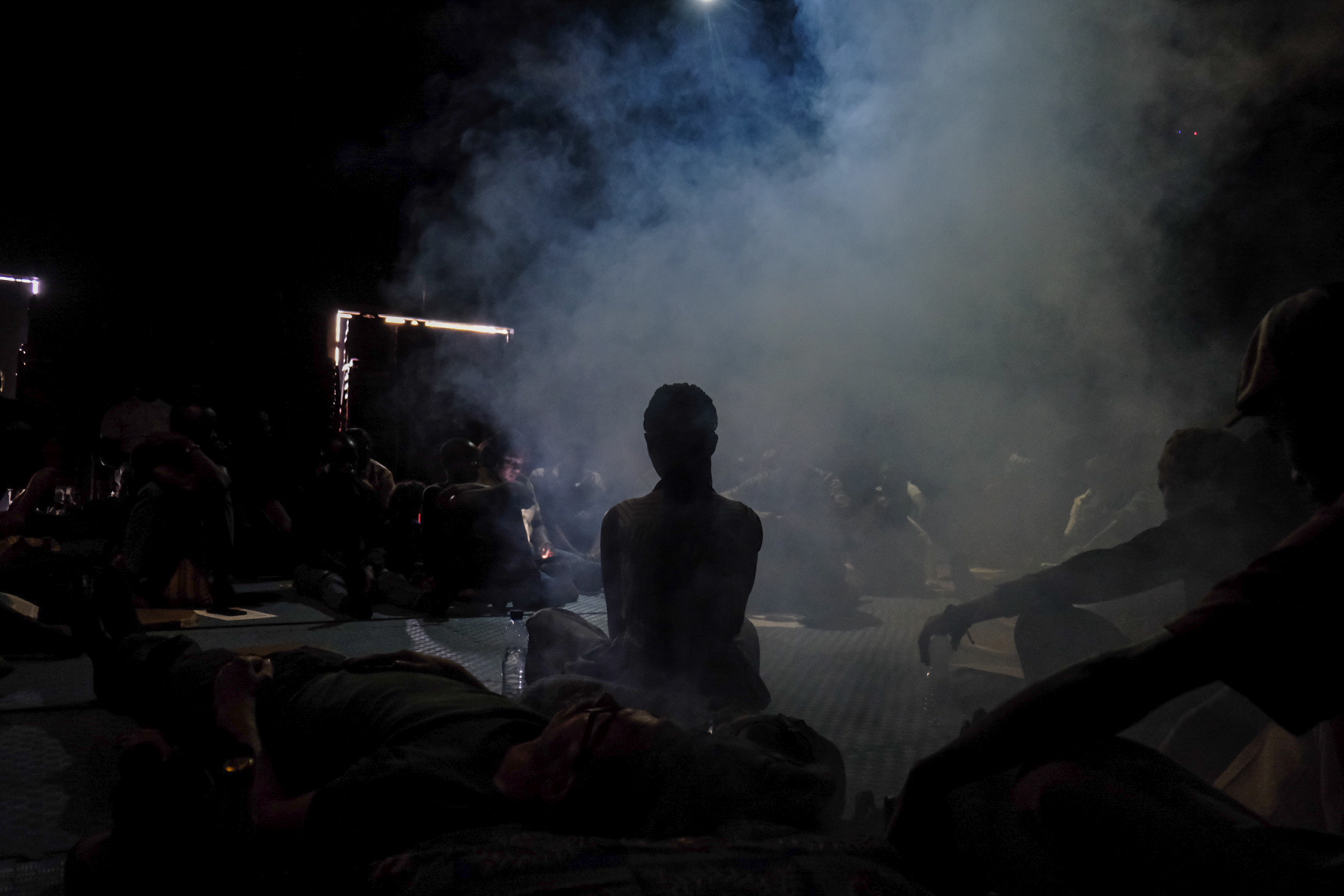
From the lithium mines of Manono, Matière (noir, blanc, bleu) (Matter [Black, White, Blue]) takes us on a sonic journey into the great night — into the extractive underside of our connected lives.
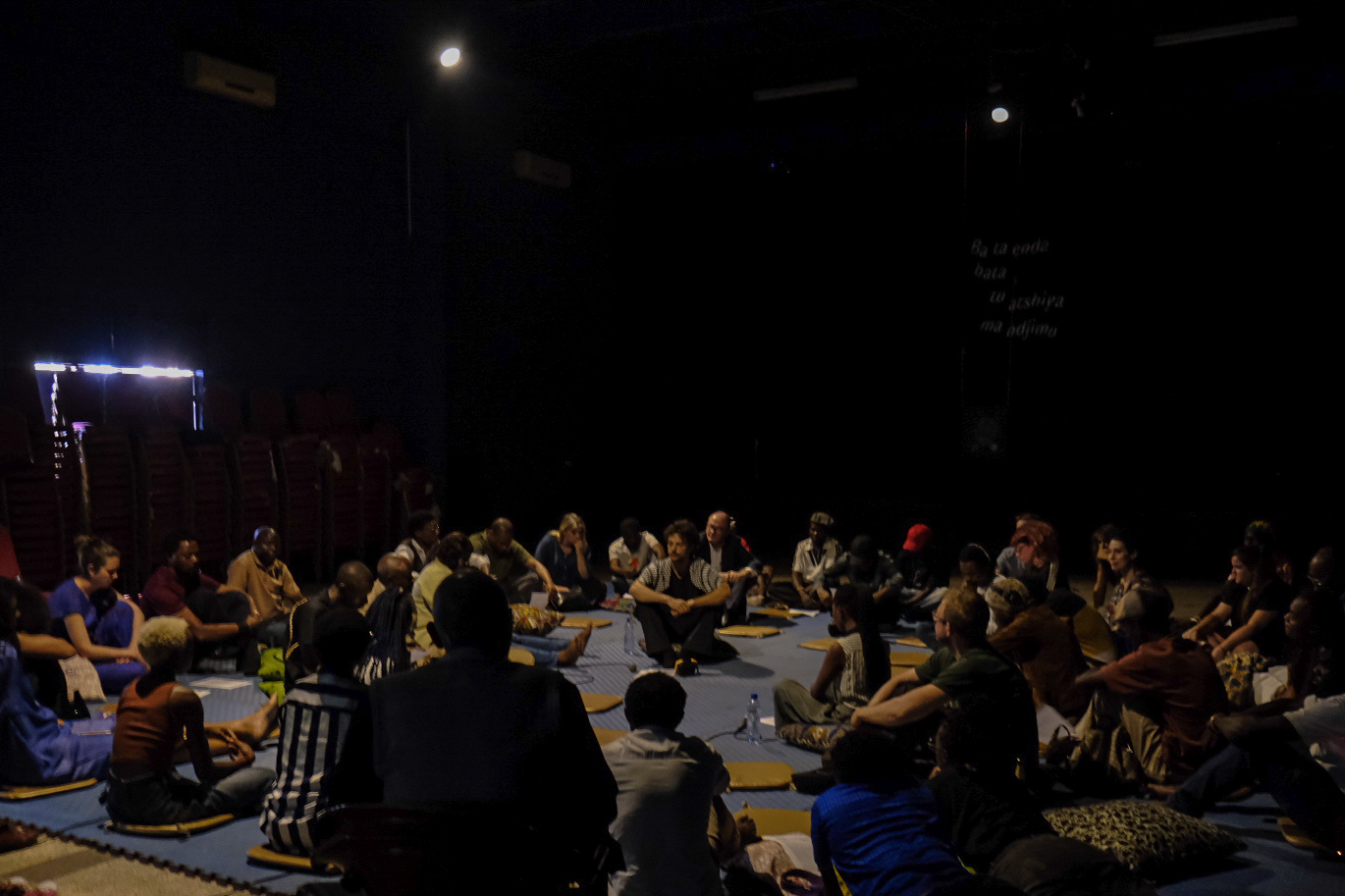
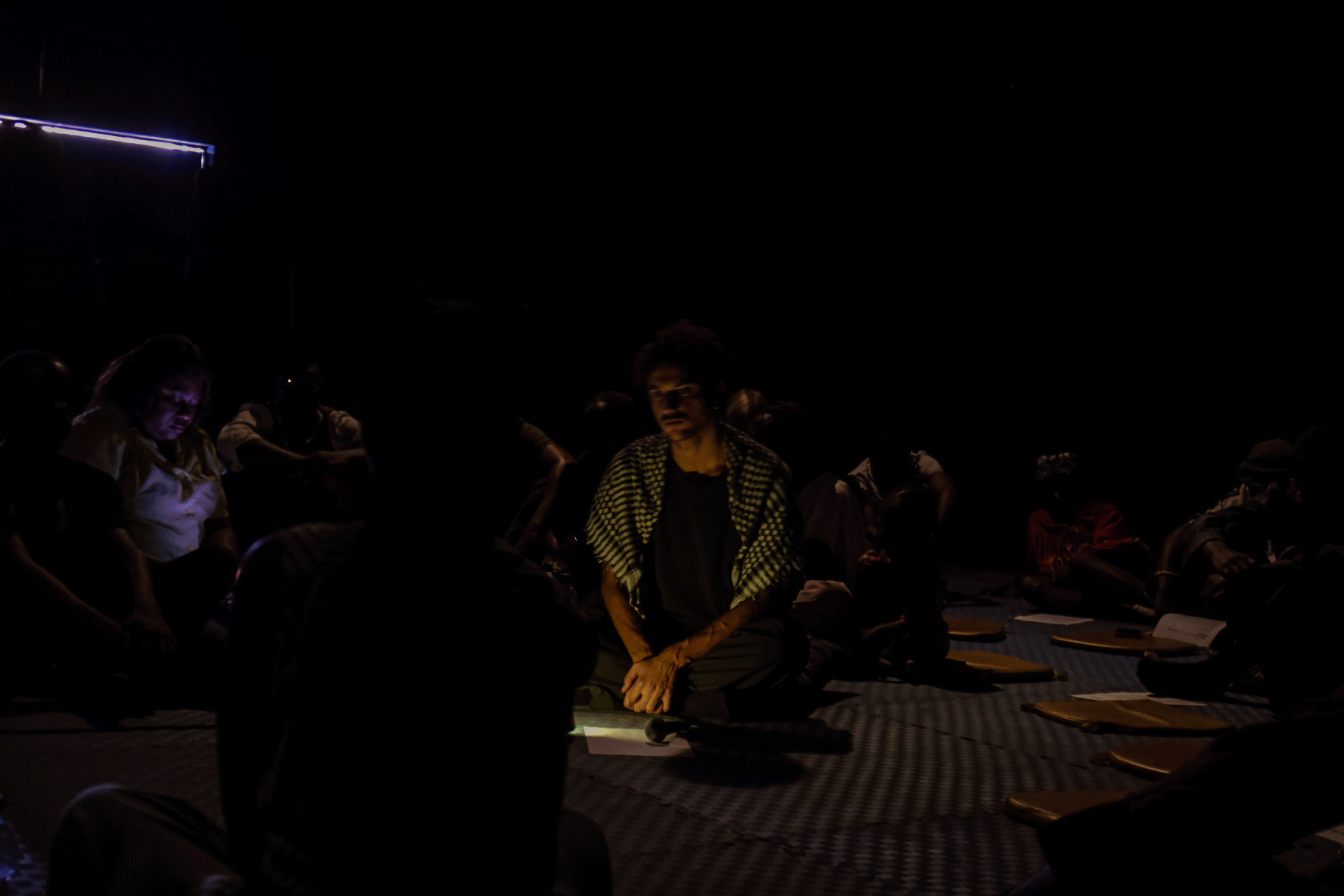
An immersive nocturnal work combining field recordings, testimonies, sound composition and live readings, Matière (noir, blanc, bleu) seeks to unsettle our ambiguities by giving presence to what usually remains invisible: our connected lives are built on the labour of women and men who extract the minerals that make our digital tools possible.
Némo Camus turns their attention to mining in the Democratic Republic of the Congo, a country whose subsoil is rich in metals and rare earth elements — copper, tin, cassiterite, cobalt and coltan — and, more recently, lithium, now known as “white gold.” Essential to electric battery production, lithium extraction contributes to landscape devastation and the exploitation of bodies. This is particularly evident in Manono, the capital of Tanganyika Province, home to one of the world’s largest lithium reserves.
The work is shaped by several powerful currents: the searing poem Minerai noir (Black Ore) by Haitian writer René Depestre; the almost cosmic presence of the holes left behind by mining, evoked by the Swahili saying, “Ba ta enda, bata tu ashiya ma ndjimu” (“They will leave, and leave us nothing but holes”); and the ambiguous figure of a dragon, sometimes described as a great serpent — an impetuous force and god of earthquakes whose name is kept unspoken, out of prudence and humility.
The voices of experts and artisanal miners intertwine with the testimonies of three researchers from the University of Lubumbashi: historian Donatien Dibwe dia Mwembu, geologist Samy Malango, and toxicologist Célestin Banza Lubaba Nkulu.
Matière (noir, blanc, bleu) is also an inquiry into the documentary gesture itself, and into the implications of working from a white, Western position — on the act of “taking” sounds and “collecting” stories. Can there be such a thing as sonic extractivism? And if so, how might we resist it?