
Open Daily 9:30–6:00, Monday Until 8:00
Beau Disundi’s study of cod and makayabu has led him to examine how flows of materials, goods, and knowledge shape landscapes, cultures, and lifestyles. These flows embody stories of displacement, change, and appropriation: materials move, alter in form and value, and become part of bodies and territories.
From this research, he developed the forge—a space where matter shifts state, with fire preceding form. It’s a transitional zone between earth and body, from extraction to transformation by human hands.
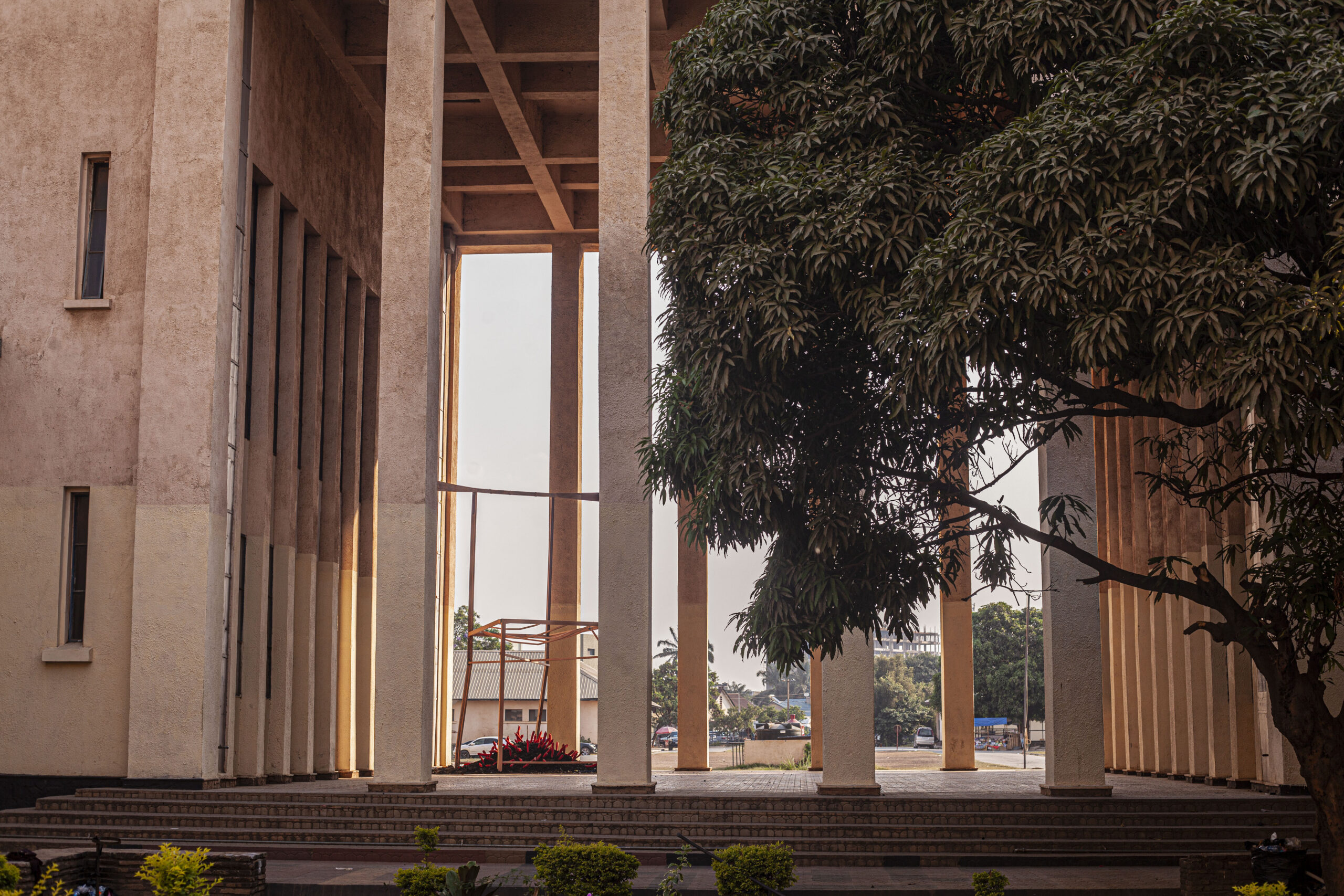
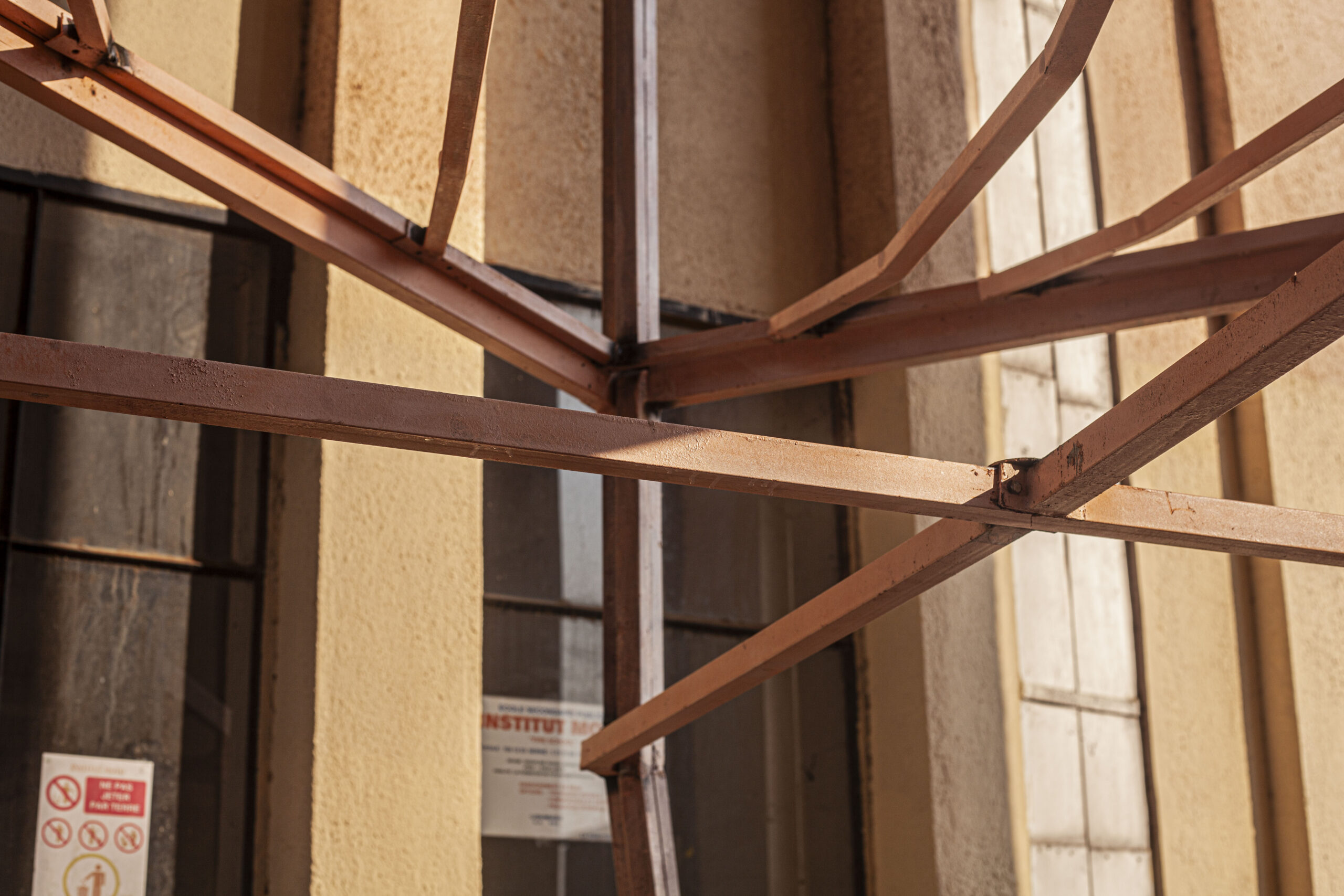
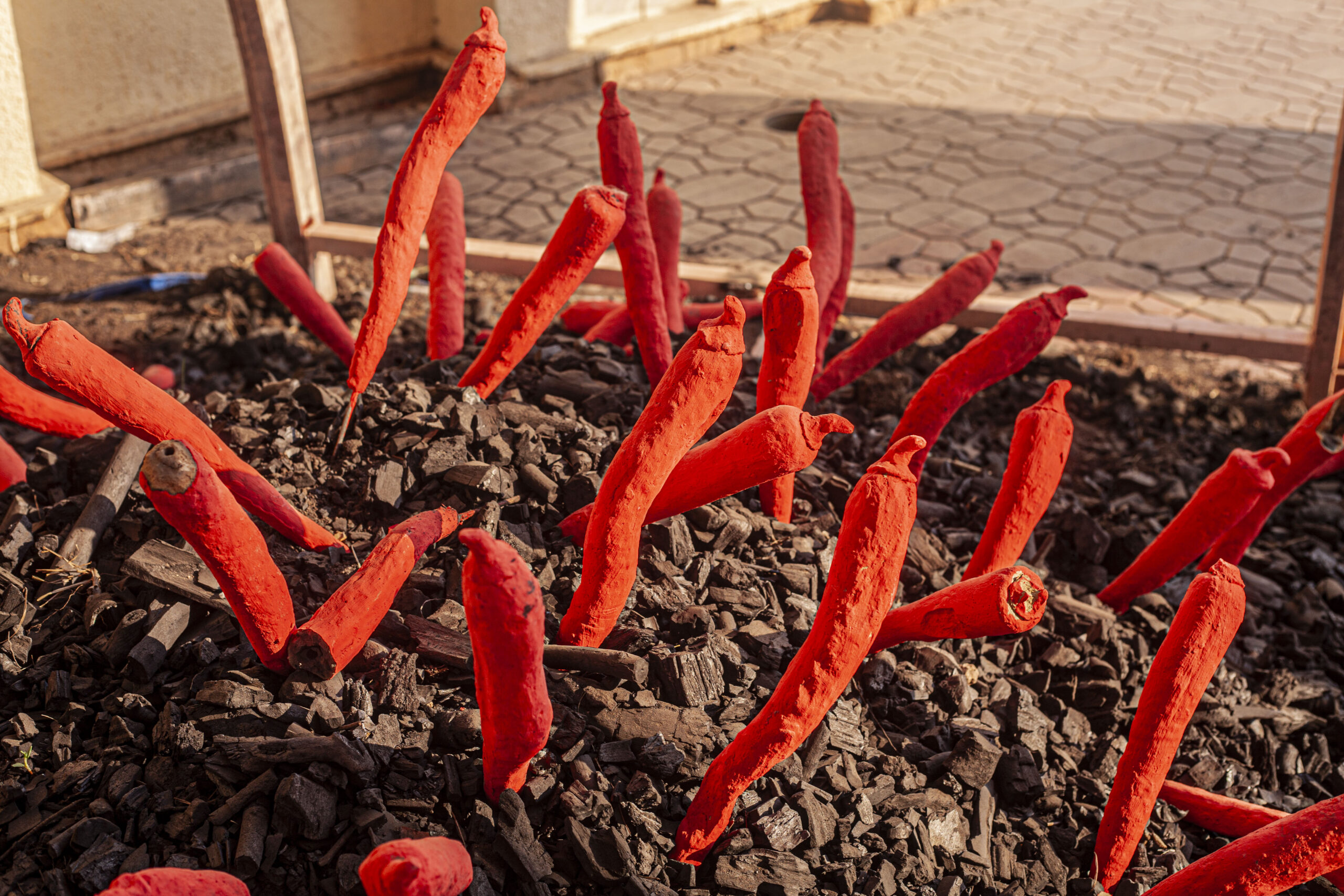
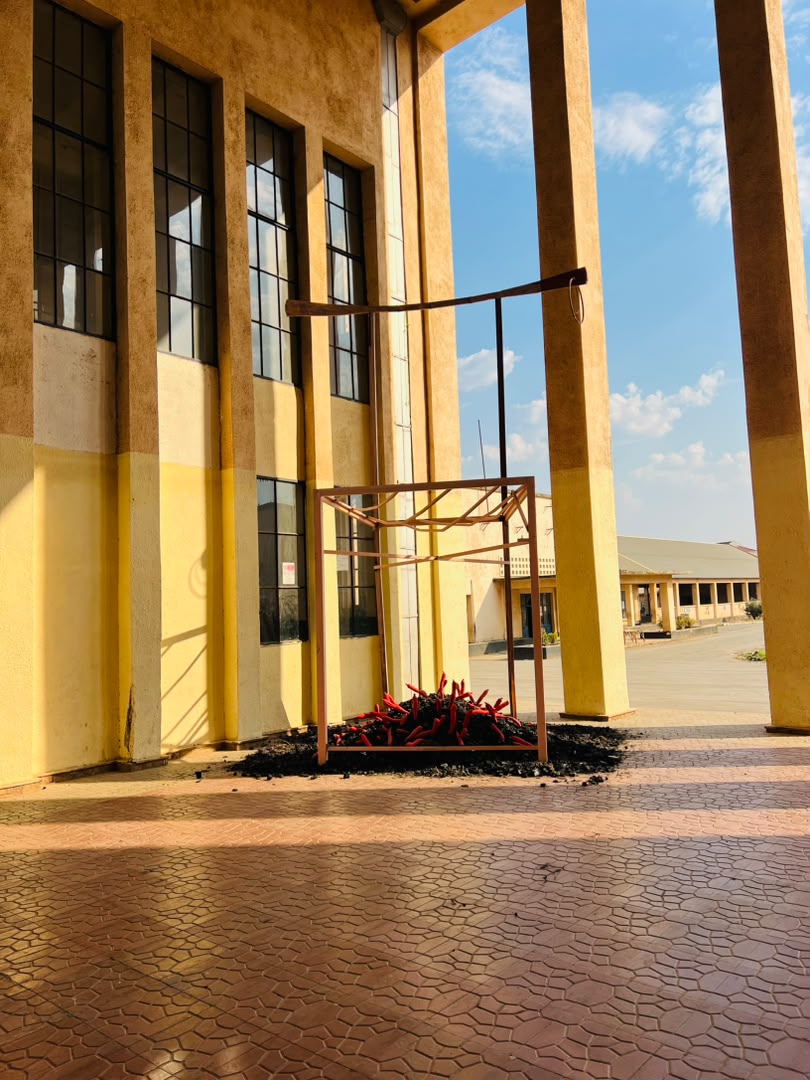
This investigation continues at the Lubumbashi Biennale with an installation featuring a giant chair atop a coal heap. As both material and residue, coal holds a history of labor, energy, extraction, and circulation. In Lubumbashi, this pile appears as a displaced fragment of earth, visible and tangible. The idea of “eating the soil” arises from this displacement: the earth circulates before reemerging in other forms. It never fully disappears, instead transforming and reappearing through landscapes, economies, bodies, and imaginations. We transform the earth just as it transforms us. Disendi’s mountain symbolizes distance and projection. From above, the world’s scale shifts. Some mountains preexist us; others are within us; they can be crossed, observed, or inhabited. The coal mountain becomes landscape, memory, and threshold.
At its peak, the chair offers a new vantage point. It seems to await a larger presence and evokes a mythical scale that allows us to observe and reorganize worlds. Gaining height isn’t necessarily about power but about shifting perspective—creating distance to see differently.
This idea echoes Valentin-Yves Mudimbe’s thoughts, especially in L’Odeur du père, where he explores how colonial frameworks persist. The “father” may vanish, but his scent lingers in institutions, knowledge, and understanding. The challenge is to create space and think from our own realities.
The coal mountain preserves its origins: extraction, transformation, labor, and traces. The chair at the top becomes both a vantage point and a beginning, prompting reflection on infrastructure, power, and the body’s capacity to see, imagine, and act.
“Eating the soil” becomes a paradox: a small gesture that distills the vastness of the world, acknowledging that the body bears its history and transformations. From studying material circulation, to forging, to this installation, Beau Disendi’s work follows a single thread: revealing how the earth transforms and embedding those changes in sensory experience.
A mountain.
A chair.
Coal.
Wind.
Sparks.
And the potential for action.