
Open Daily 9:30–6:00, Monday Until 8:00

Lubumbashi
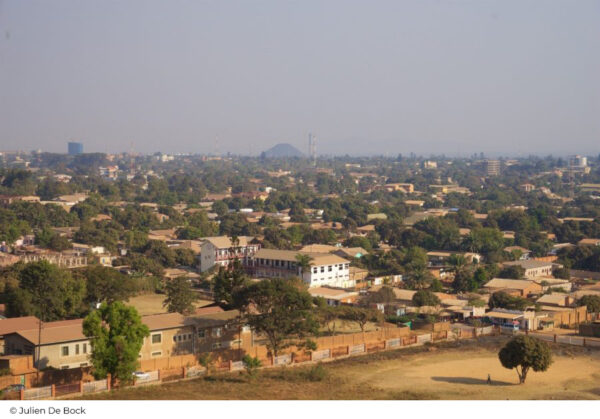
Lubumbashi is the second-largest city in the Democratic Republic of the Congo and the main economic and industrial center of the country’s south-eastern region. Located in Haut-Katanga Province, close to the Zambian border, it is home to nearly 2.8 million inhabitants. The city developed in the early 20th century around copper mining. Founded in 1910 as Élisabethville by the Belgian colonial authorities, it quickly became an important mining and industrial center. After the Congo’s independence in 1960, the city was renamed Lubumbashi, after the river that runs through the region.
Today, Lubumbashi lies at the heart of the Congolese Copperbelt, one of the world’s major copper and cobalt-producing regions. The extraction, processing and transformation of minerals play a central role in the local economy and have profoundly shaped the city’s urban development, architecture and infrastructure. The city is also home to a wide range of other industrial activities, including metallurgy, cement production, food processing, breweries, milling, the manufacture of construction materials, bricks and other manufactured goods. Its role as a regional commercial and transport hub further reinforces its importance.
But Lubumbashi is not defined solely by industry. A university, commercial and cultural center, the city has a vibrant artistic scene that has developed around photography, visual arts and numerous independent cultural initiatives. The Lubumbashi Biennale is part of this history and contributes to establishing the city as a space for reflection on the region’s social, economic and environmental transformations. Between colonial memory, mining heritage, urban change, and contemporary artistic creation, Lubumbashi offers a particularly rich context for hosting an international artistic event.