
Open Daily 9:30–6:00, Monday Until 8:00
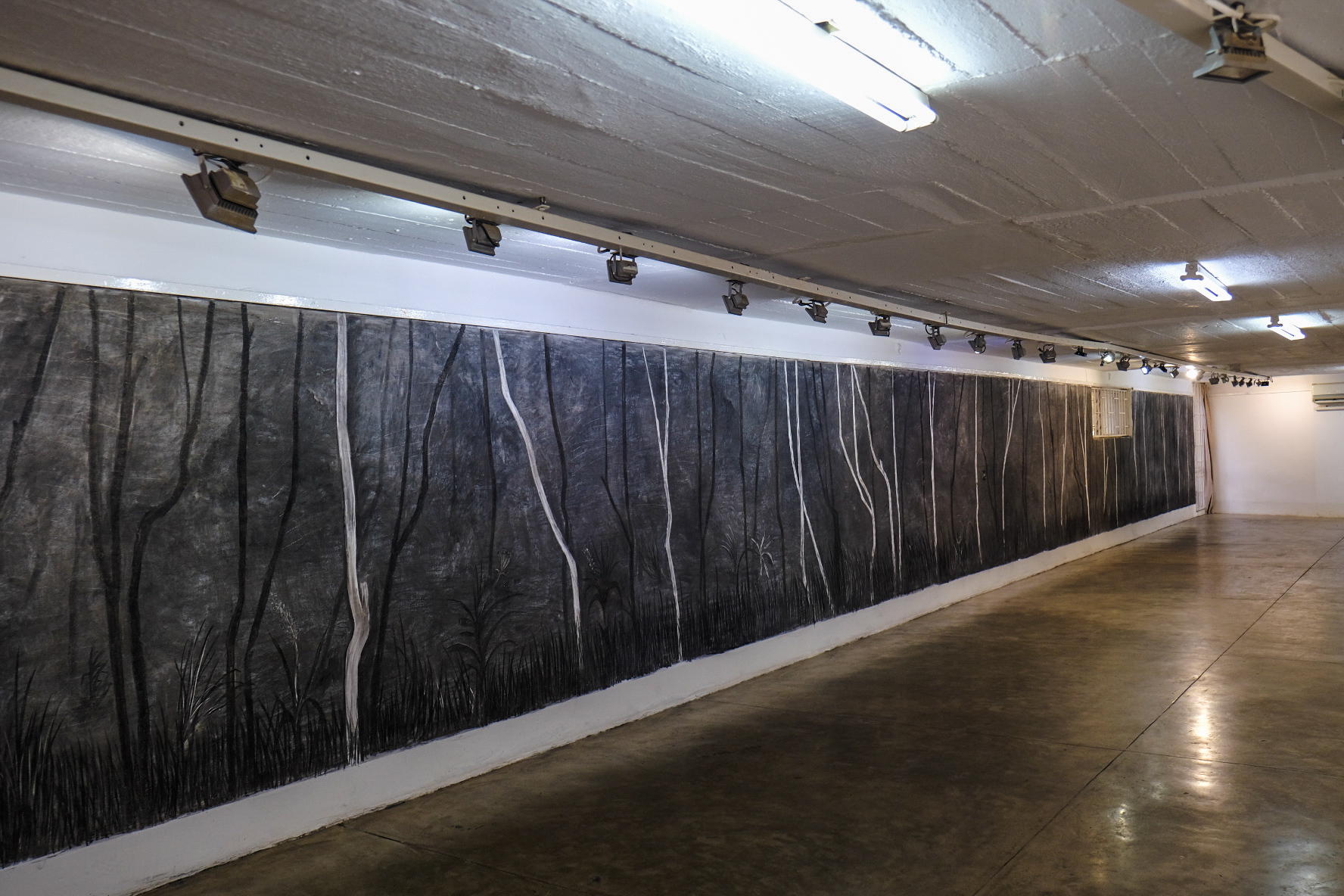
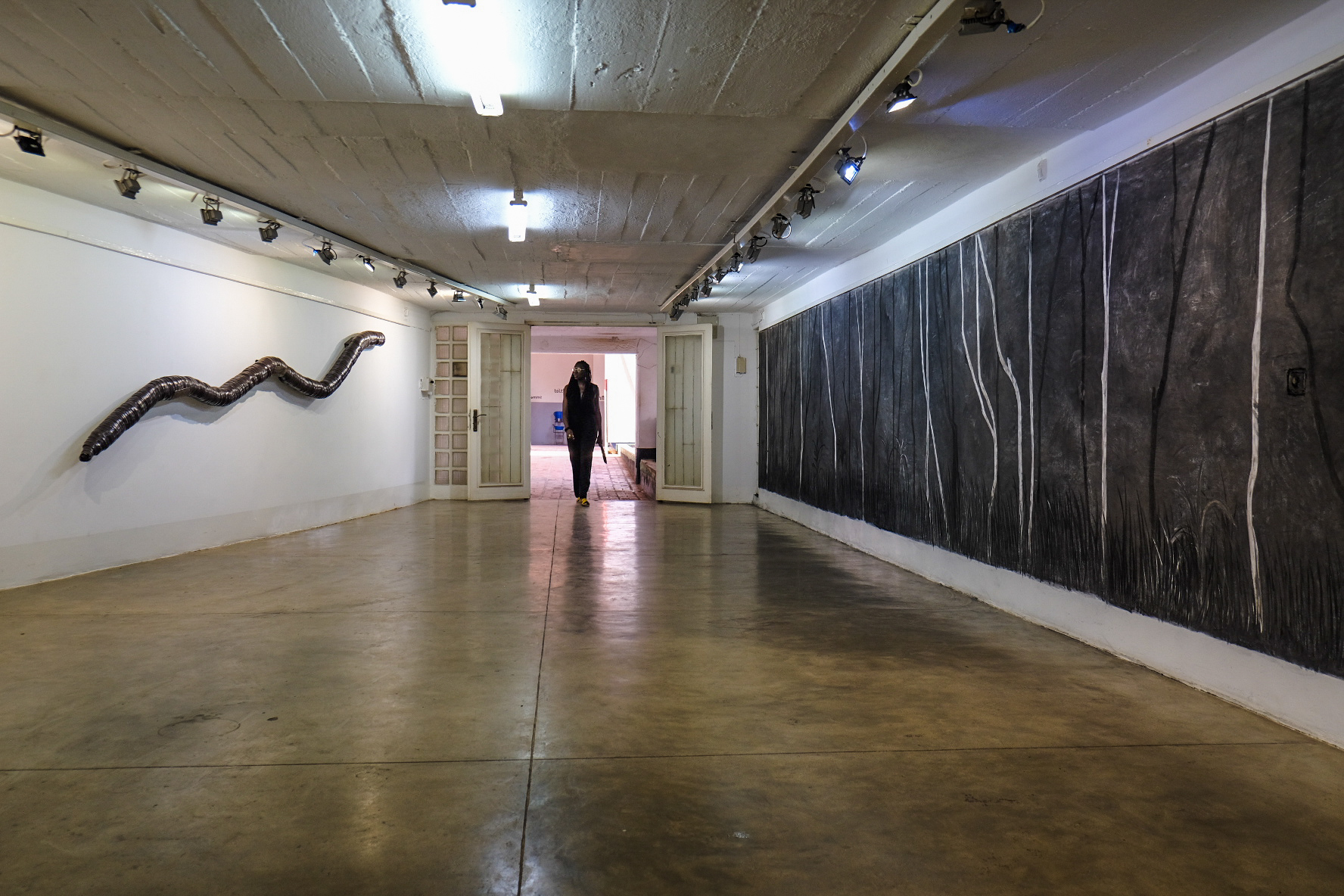
N on-P a yment f or t h e S i gni n g R o pes; Scene II presents an imagined nocturnal landscape where trees stand stripped of their bark. Their exposed trunks bear the scars of extraction: the bark has been removed and transformed into mooring ropes used to secure vessels, including ships implicated in the histories of the transatlantic slave trade.
The landscape is thus not neutral scenery, but a site where histories of extraction and violence remain materially present. The trees are left naked, wounded, and economically exhausted, while the ropes made from their bodies disappear into histories of movement, commerce, captivity, and power. The title, N on-P a yment f or t h e S i gni n g R o pes, evokes an unresolved debt: what is owed to the land, the trees, and those whose histories are entangled with systems of extraction?
Within this landscape, ants, birds, antelopes, and hyenas participate in an imagined process of repair, carrying river mud back to the wounded trees and surrounding terrain. Their actions suggest forms of ecological and collective restoration beyond human systems of ownership, compensation, and accounting. Yet repair is neither complete nor redemptive: scars remain visible, and the landscape continues to bear the evidence of what has happened to it.
Charcoal is central to the work’s material language. Derived from wood through burning, it connects the image to organic matter, transformation, carbon, fire, residue, and disappearance. Its unstable blackness evokes both what remains after destruction and what is being erased. As charcoal accumulates, smears, and leaves traces, it mirrors the landscape itself: damaged but not silent, altered but unresolved.
The nocturnal setting further suspends the landscape between visibility and disappearance. What emerges from darkness contrasts with what remains concealed, suggesting histories not fully acknowledged. The landscape thus becomes an evolving condition rather than a fixed image, where the past continues to inhabit the present and extraction, violence, memory, and repair remain entangled.