
Open Daily 9:30–6:00, Monday Until 8:00
Everything can be saved. Everything is provisional. A prior action is rescued by that which follows. A drawing abandoned is revived by the next drawing.
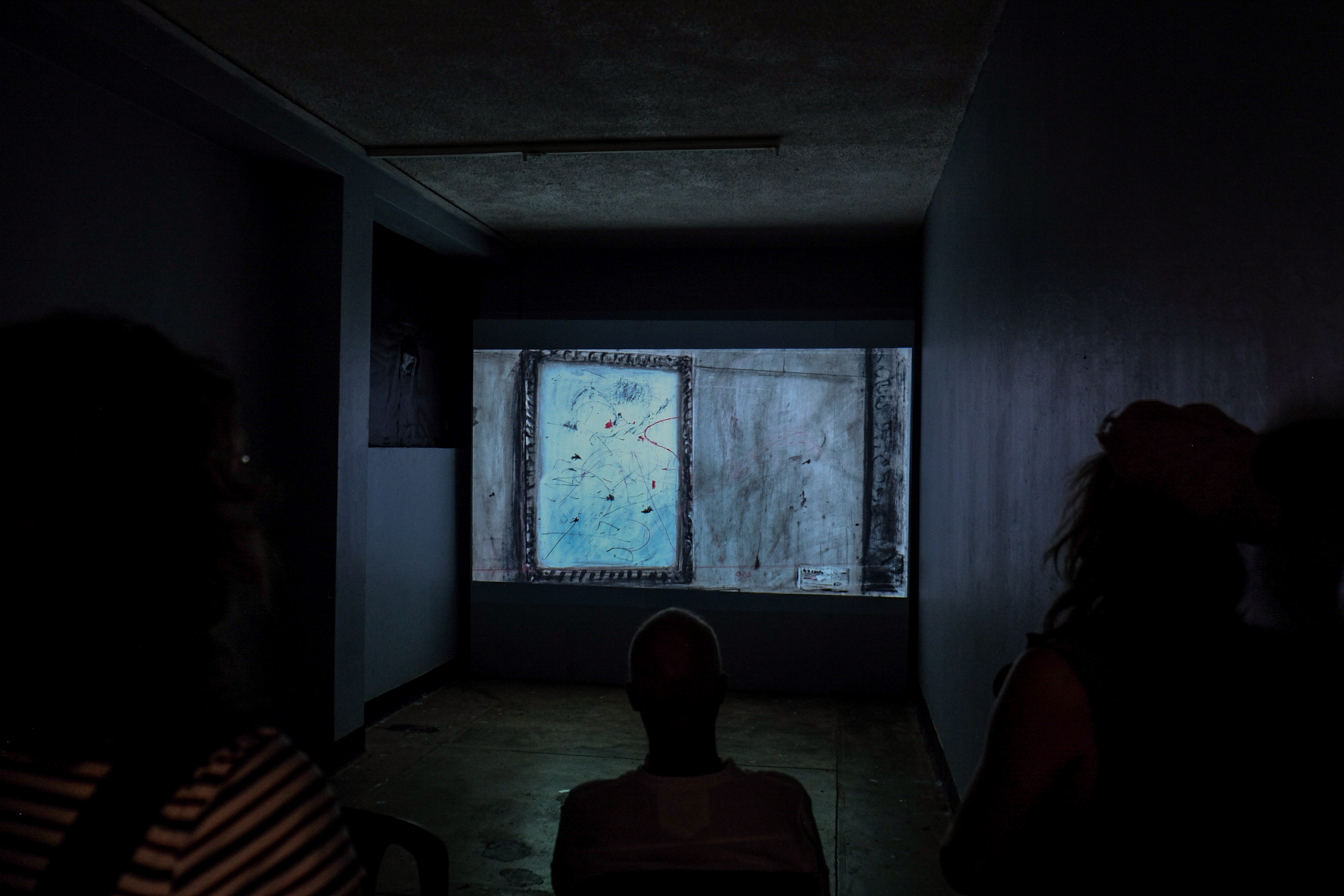
The films of Soho Eckstein and Felix Teitlebaum were all made with the principle of NO SCRIPT, NO STORYBOARD. The making of each film was the discovery of what each film was. A first image, phrase, or idea would justify itself in the unfolding of images, connections, and ideas spawned by the work as it progressed. The imperfect erasures of the successive stages of each drawing become a record of the progress of an idea and a record of the passage of time. The smudges of erasure thicken time in the film, but they also serve as a record of the days and months spent making the film—a record of thinking in slow motion.
A slow trawling of motives, of connections between the characters in the film and in their world—the world of South Africa since the late 1980s. There is if not a deliberate blindness then certainly a bluntness in the progression of the films: bluntness both in the crude charcoal and fat erasures that are inevitable when using these materials, and in the unrefined succession of images. In the expectation or resignation that in the end, crude or sharp, well or ill, the constellation of images, story, and sound will reveal who one is (who I am, although the first person singular feels an impertinence, or at any rate inadequate. One of the things the films showed was that Soho and Felix were both close to me — not so much a self divided, but the artist as mediator between several different factions of the self. In Stereoscope Soho divides in two; in History of the Main Complaint he becomes eight or nine).
The first Soho film was an indulgence, time out from being an artist, a private pleasure that did not have to make sense to anyone outside the studio. Once the films started to be seen (about three years after the series began), it became harder to reclaim each time the space of not knowing what I was doing. One of the tasks of the years has been to find strategies to keep clarity at a distance. I still rely on a first image, phrase, or idea, but with oceans unknown between them—a sufficient impetus to put the camera in front of the paper and shoot the first frame.
The hope (and this is too much to load on the films) is that the succession of images and the connections between them will show not only a way forward for the narrative of the film, not only a revelation of who one is, but also a hint as to how to go forward in the world outside the studio, as if the gradual accretion of marks can somehow lumberingly draw agency into existence.