
Open Daily 9:30–6:00, Monday Until 8:00
Sahil Naik has spent over a decade studying and recalibrating complex images to uncover what happened under certain circumstances, expanding the evidence and witness potential of materials. In Sour Stars and Breadfruit Monsoons, he creates a scenography of image fragments isolated from colonial landscape studies and murals across Goa, Bombay, and Daman. By highlighting “backgrounds” and drawing attention to details, he explores these images while connecting them to broader conceptual, architectural, and botanical contexts in South America, Africa, and Asia. This approach destabilizes the traditional historical narrative by highlighting minor details that challenge the dominant story, revealing the fluidity of land and ocean histories.
- A Spell, a Scene, a Search
The colonizers came looking for magic, but settled for spices instead. The first to be colonized
was the wilderness, that had to be tamed to make the land seem “hospitable”. Second came the plantation plot, followed by the architecture of the colony.
In Konkani, a ship is seen as a creature paying homage, bringing offerings. The exhibition title combines two Goa references: “Sour Stars” for star fruit, and “Nirphanas” (Breadfruit) for a monsoon harvest, both cultural icons. Despite plant migration, local language didn’t fully adapt; Nirphanas translates to “Water Jackfruit,’ used as a fish substitute in Goa’s monsoon seasons. Its 17th-century depiction it as an offering to an ant-hill by Augustinian nuns in a baroque chapel, is telling of the many histories this exhibition lays claim to.
- Foliage, and a fever dream.
Dream-like, a vision forms slowly– a ship sick from the sea peers through the haze to arrive at a lush, wild landscape. Intuition and hearsay, become discovery.
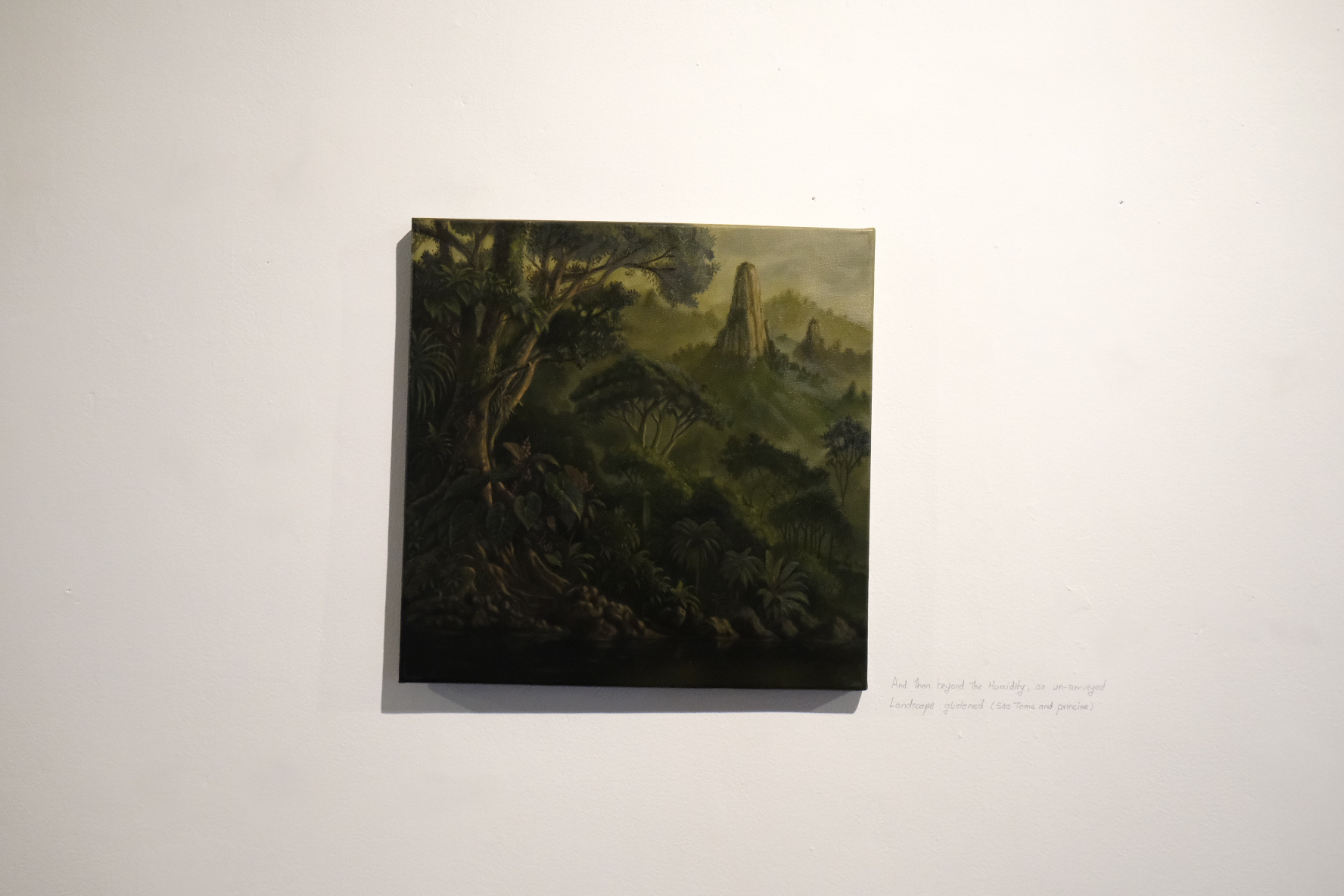
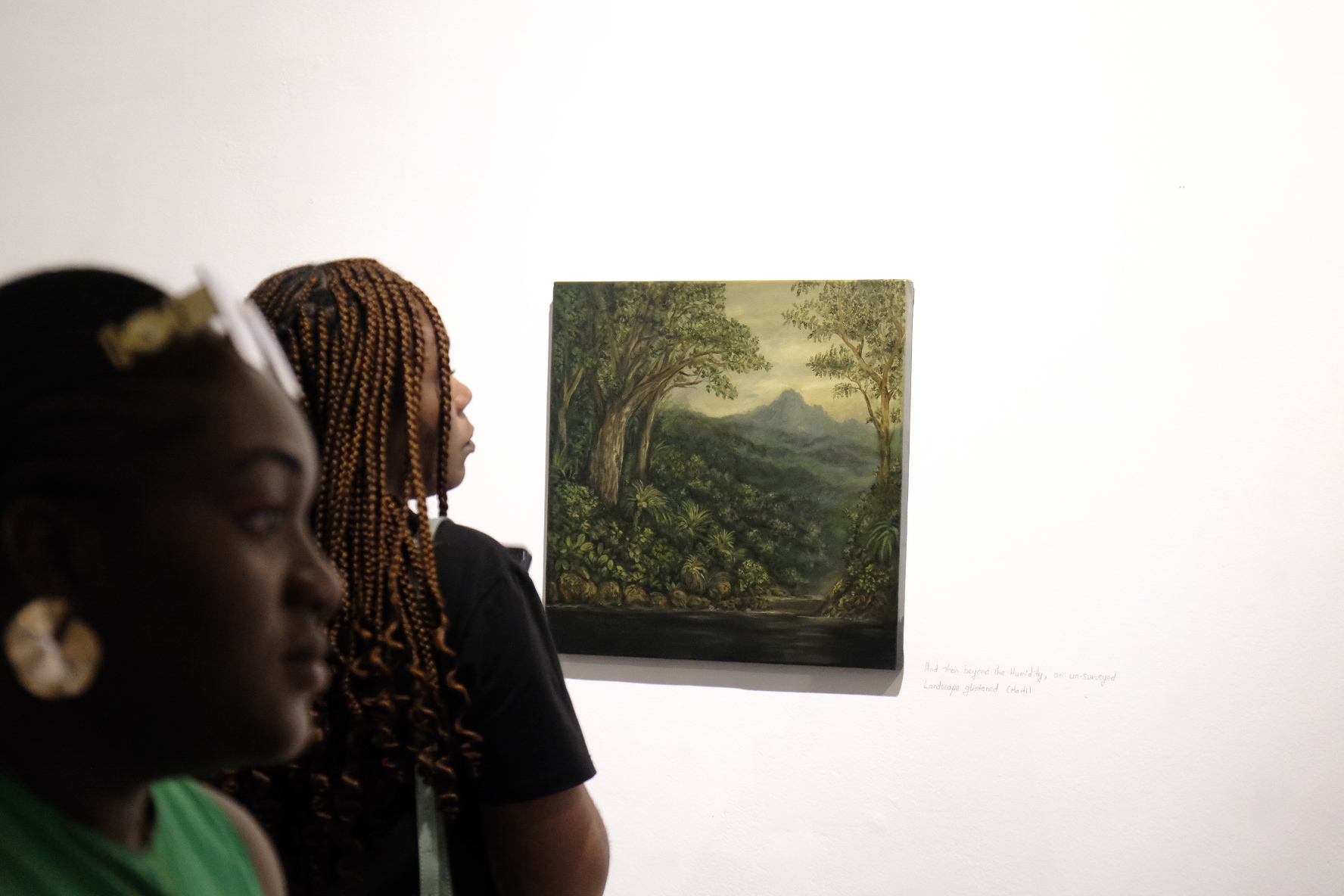
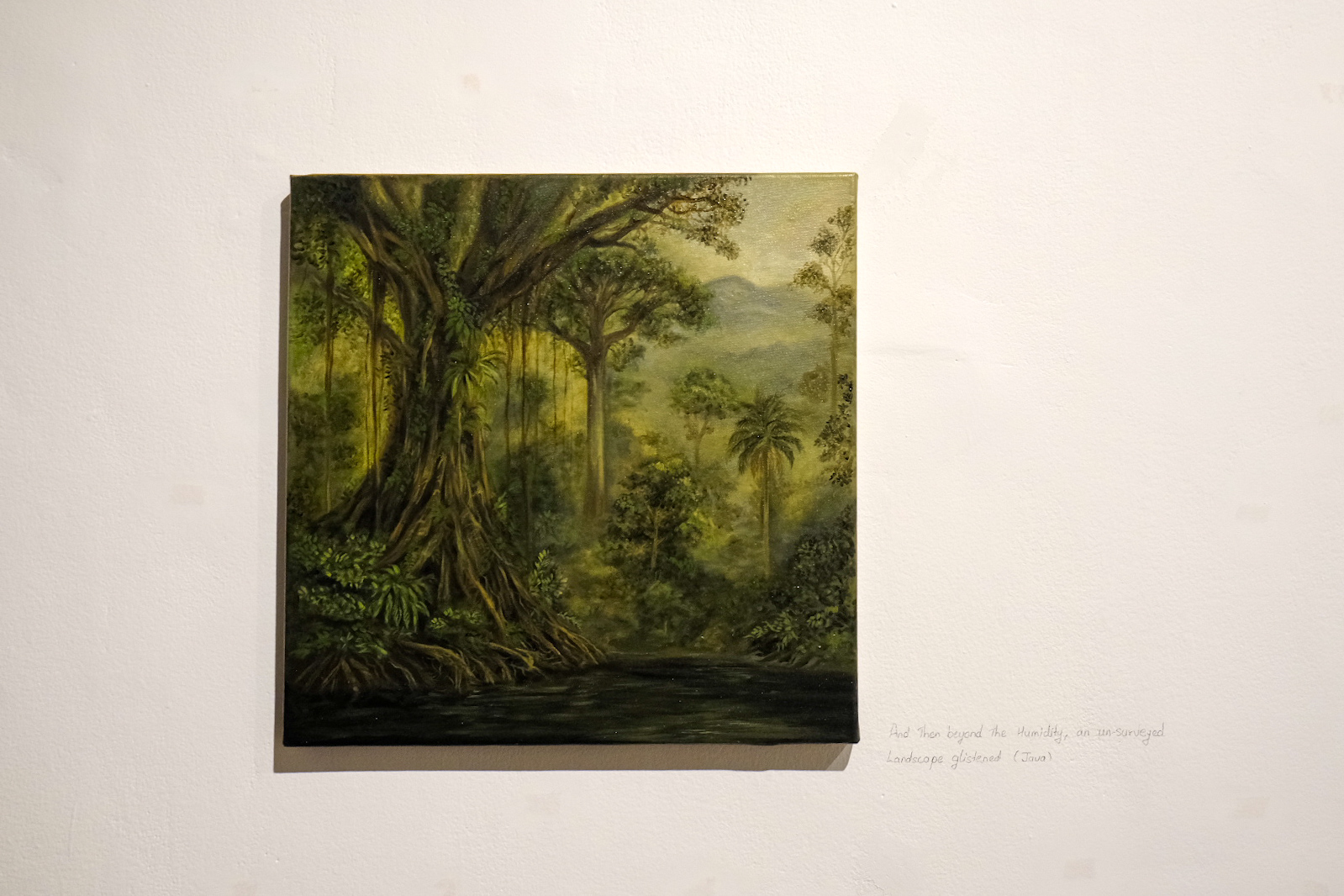
Since the earliest records of colonized lands were produced by the imperial eye, it’s safe to say that no authentic first image exists. What methods can we employ to recover the image to its closest, “native” self? In the series, And then beyond the humidity, an unexplored landscape glistens. Naik seeks early images of tropical lands from Kar Nicobar to Malacca. Priests, cartographers, and surveyors quickly etched images of “pristine” lands, strange and wild. These images weren’t always accurate and depended on the artist’s skill and knowledge. Naik undertakes two corrective steps: first, eliminating non-native plants and trees painted to depict lushness, based on known flora; second, replacing them with native regional flora.
III. Looking for clues in history paintings
In 2020, Naik examined a series of paintings by José Maria Gonsalves called Two Views of Goa, from early 19th century, depicting Goa’s people, caste, and costumes with the Mandovi river and city, including structures now lost. He analyzed their cartographic accuracy, noting omissions and biases, revealing gaps in colonial history and showing plants as ambiguous, resisting fixed meanings. Colonial influence is symbolized by a devil’s wine; Vergès links colonial botany to empire infrastructure, involving plants with enslaved labor, trade, and military expansion, affecting landscapes globally. Works like Sour Stars and Breadfruit Monsoons depict colonial processes of land-plant relationships through voyages and wars. The Caribbean-origin Mile-A-Minute vine illustrates tensions in landscape and empire, where colonization aimed to reshape land, people, and culture. Naik’s work highlights how plants like breadfruit and guava preserve local and cultural memories amidst historical change.
- Distant Whispers and Lucid Dreams
Nestled amidst biblical imagery is a little patch of fruiting ananas. Not far under circling birds
stands a thick, deep-lobed breadfruit tree. In another landscape, the carambola (star fruit) lay strewn under a tree.
Ecclesiastical murals across Goa, Bombay, and Daman, mostly painted by nuns and local artists, blend local iconographies with European religious images, depicting plants like grapevines and lilies alongside tropical fruits such as guava and cashew. These murals, created by artists who never traveled but relied on verbal descriptions, are imaginative rather than precise, resisting colonial demands for accuracy. They reflect an oceanic world built through circulation, emphasizing ongoing encounters rather than fixed territories, contesting imperial images, and producing a relational world instead of a pure or native one.