
Open Daily 9:30–6:00, Monday Until 8:00
The energy transition and technological progress rely on the exploitation of territories such as the DRC, rich in resources essential to this global emergency. Yet this exploitation comes at the expense of source communities and intensifies the effects of climate change. Between Sky and Earth, the Human explores this contradiction through the metaphor of bodies contaminated by their territory.
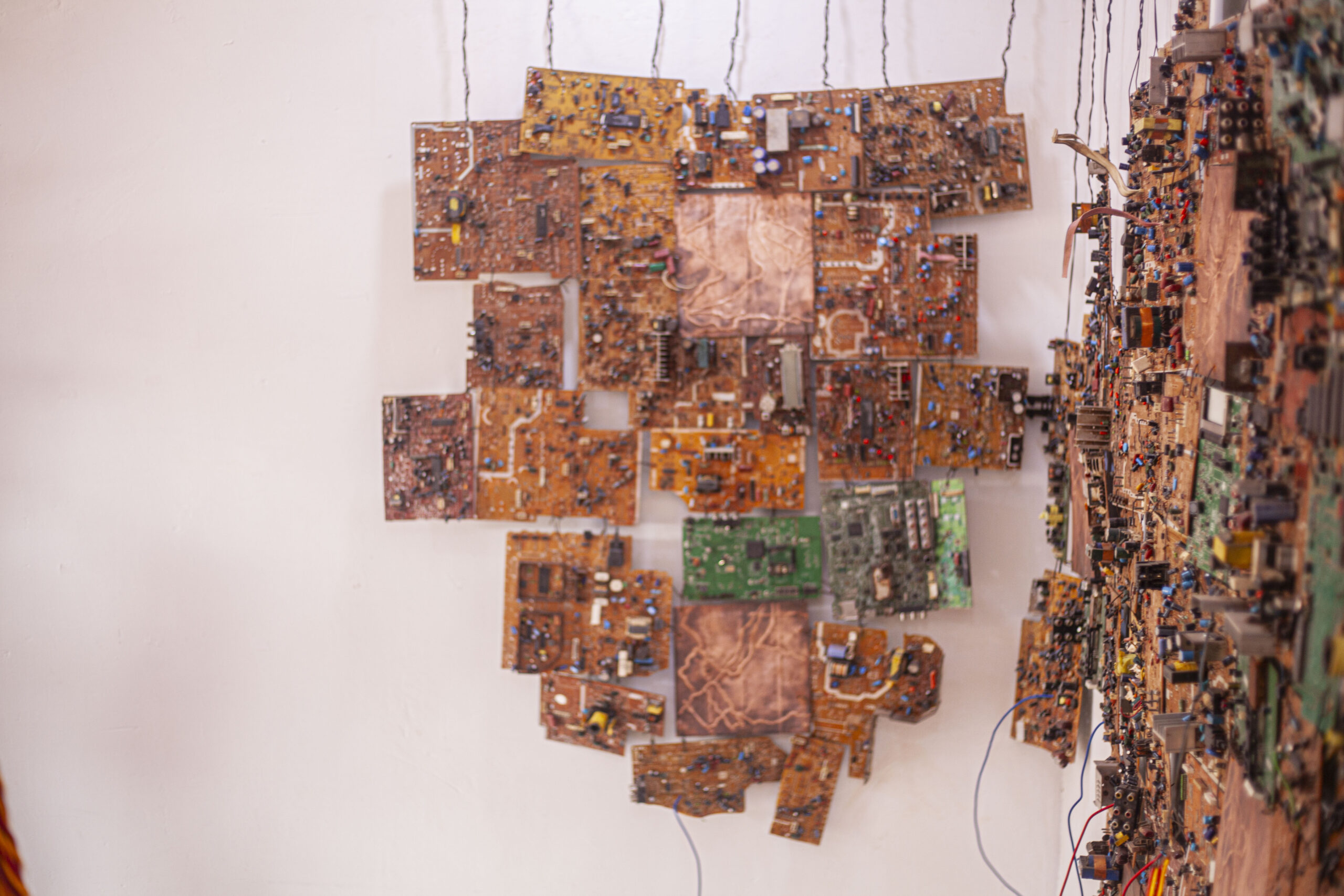
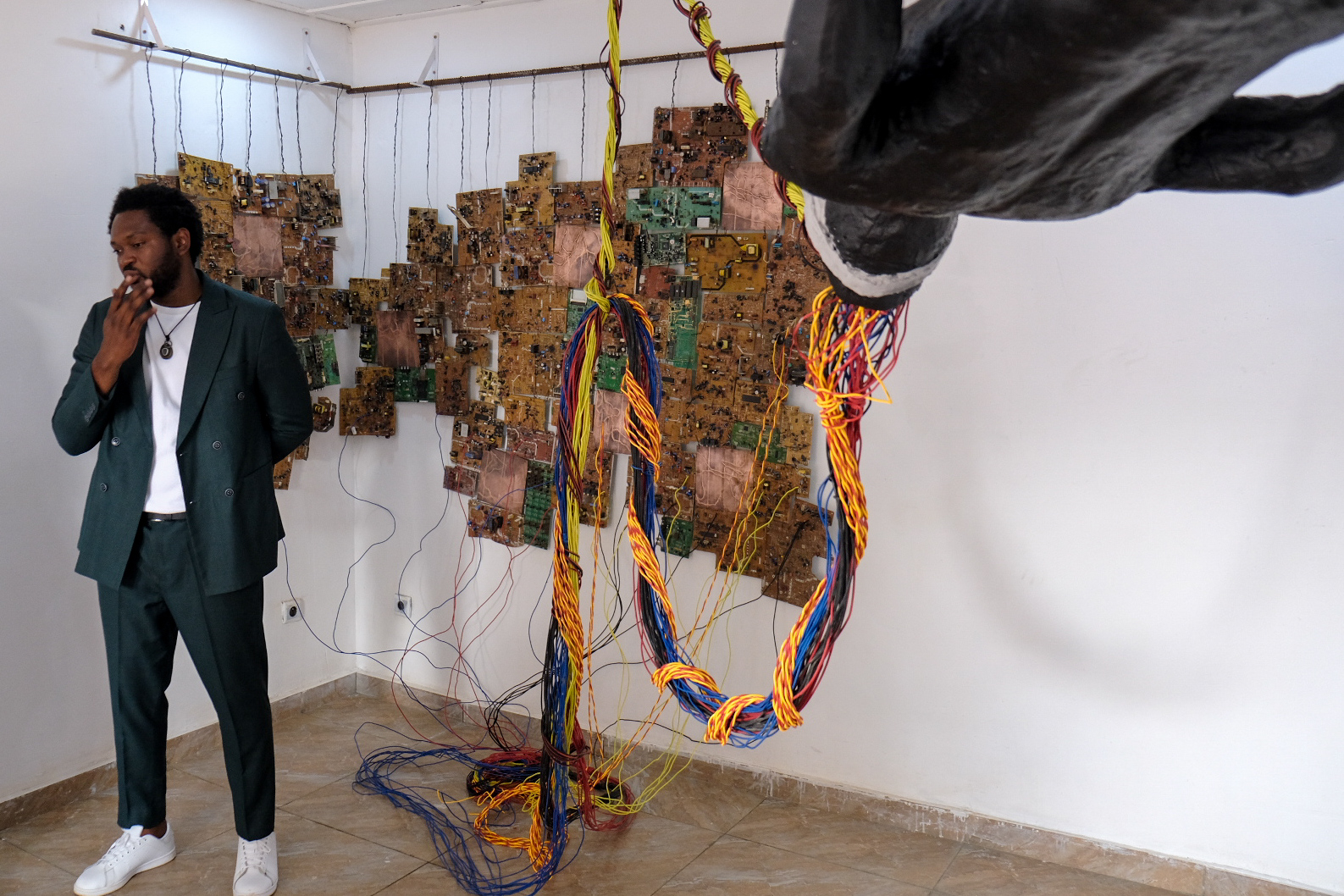
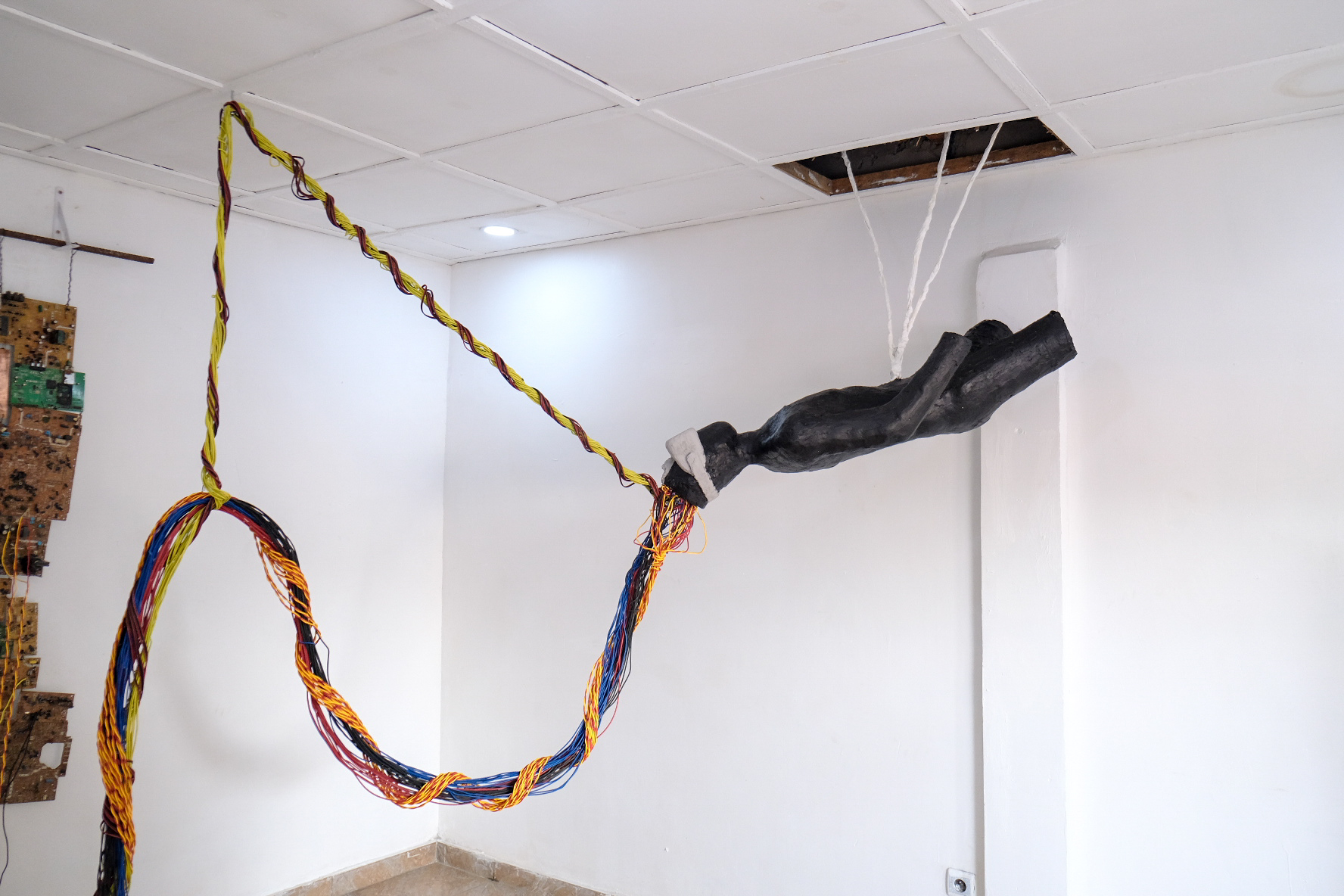
The project is situated within a poetic and activist (political) heterochrony, where the body becomes a sensitive territory. Motherboards, radio circuit boards, electrical cables, electronic waste, and copper plates become materials through which I question the habitat of our contemporary humanity.
The installation combines sculpture, photography, collage, copper repoussé, and mural drawing. Copper photographic maps bring together spaces of extraction and habitation, mines, rivers, and mining-waste dumps. Their lines become unstable paths, revealing the porosity of territories and calling for visual disobedience as an act of repair.
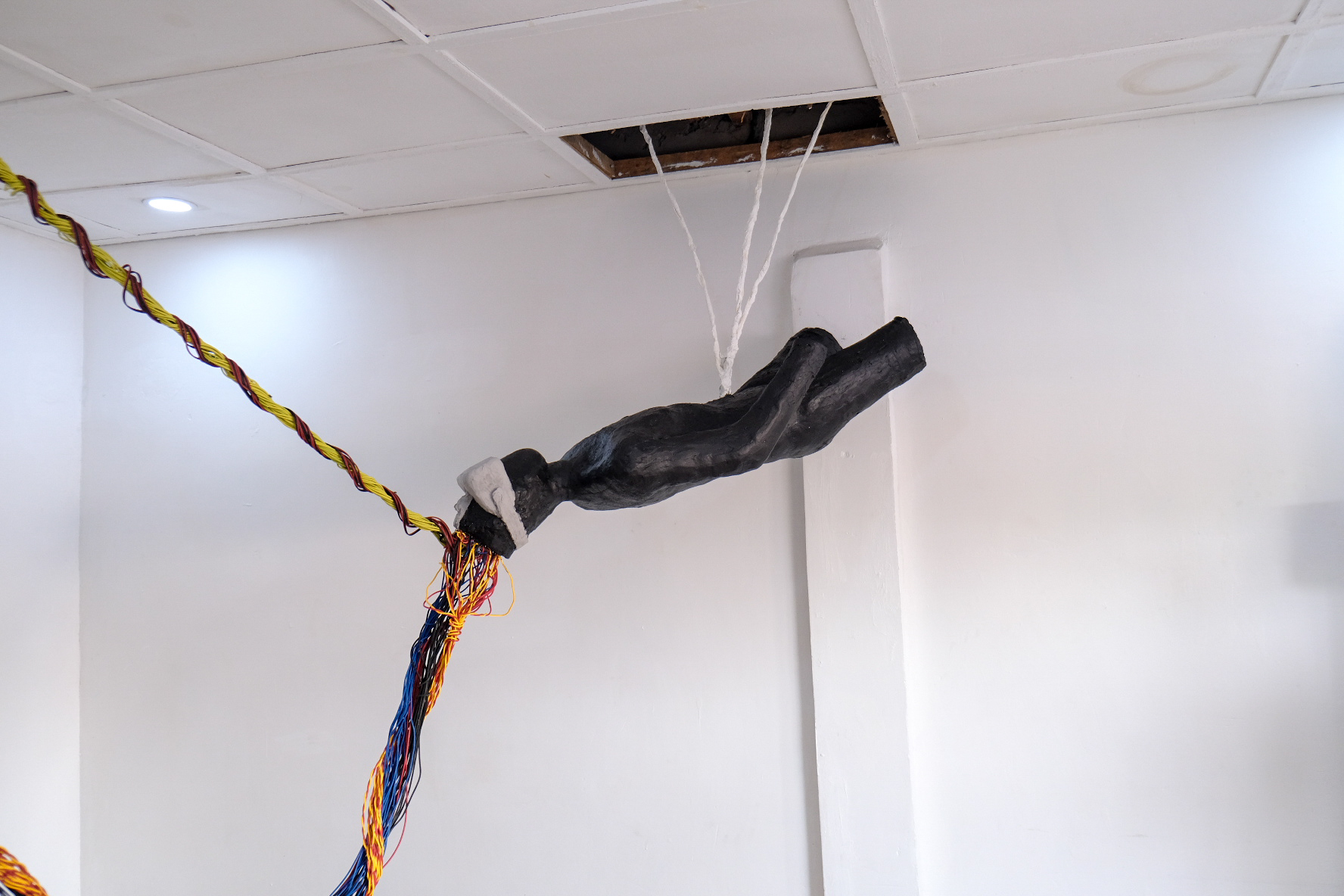
Photomontages depict bodies absorbed by their screens, their flesh visually contaminated by electronic waste, motherboards, cables, and radio circuit boards. At the center, a Black body, perhaps that of Kasau Wa Mambwe, hangs suspended and connected to a monitor, becoming the epicenter of the data and energies circulating throughout the installation. The cables extend toward a wall where electronic waste forms an invasion of termite mounds.
This Black body invokes Achille Mbembe’s thinking on the becoming-Negro of the world: the Black body as historical material of endurance and suffering, the “muscle of the world,” the machine that makes the North run. In the face of the growing robotization of the human and the rise of AI, this experience resonates with slavery, colonization, neocolonialism, and racial injustices.
The installation thus becomes a reflection on the extraction of our resources and our suffering, but also a claim to our humanity: to rediscover ourselves, as Achille Mbembe puts it, “as free subjects, as Human beings!”