
Open Daily 9:30–6:00, Monday Until 8:00
Located in Haut-Katanga province, Lubumbashi and its surroundings have been deeply shaped by over a century of copper and cobalt mining.
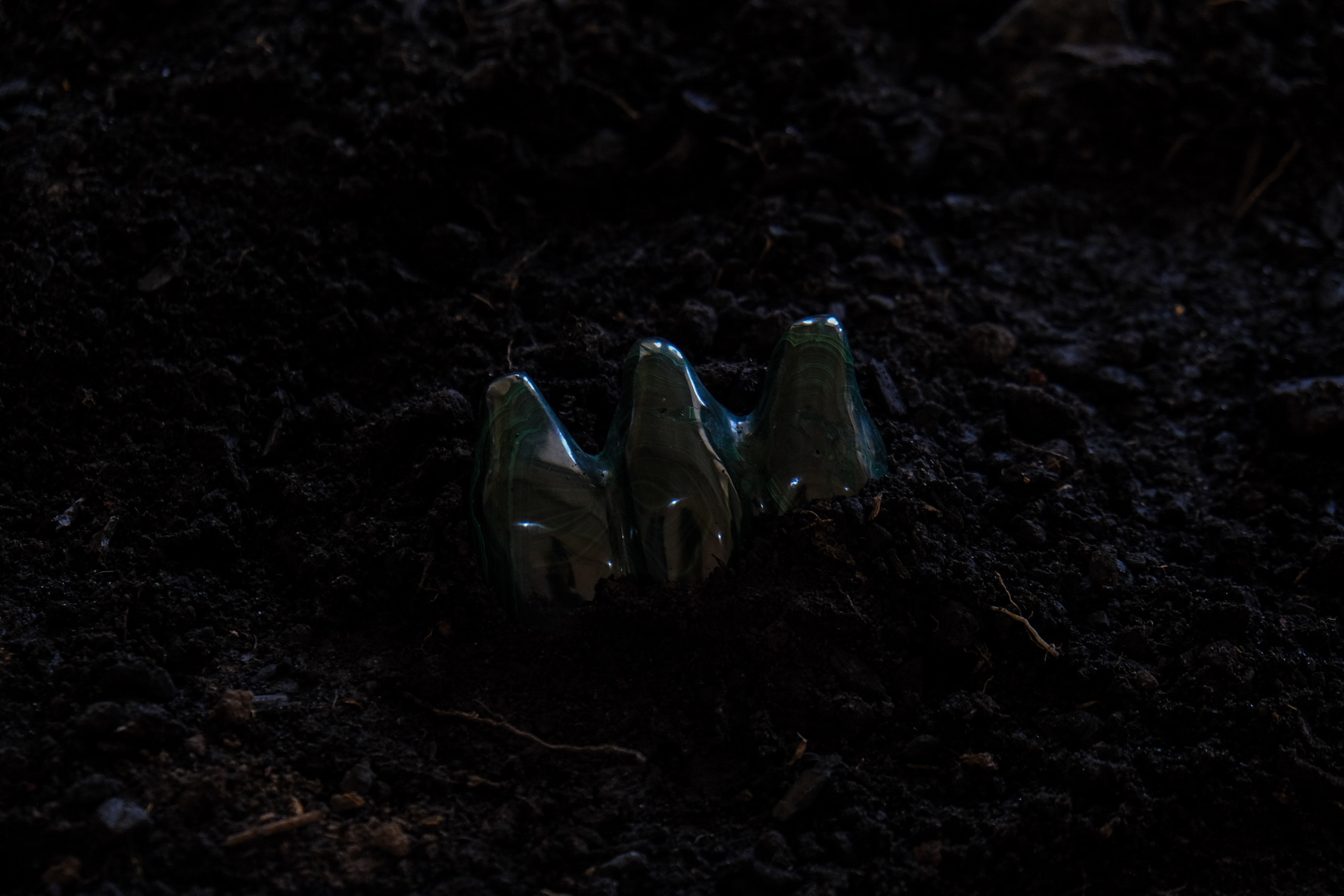
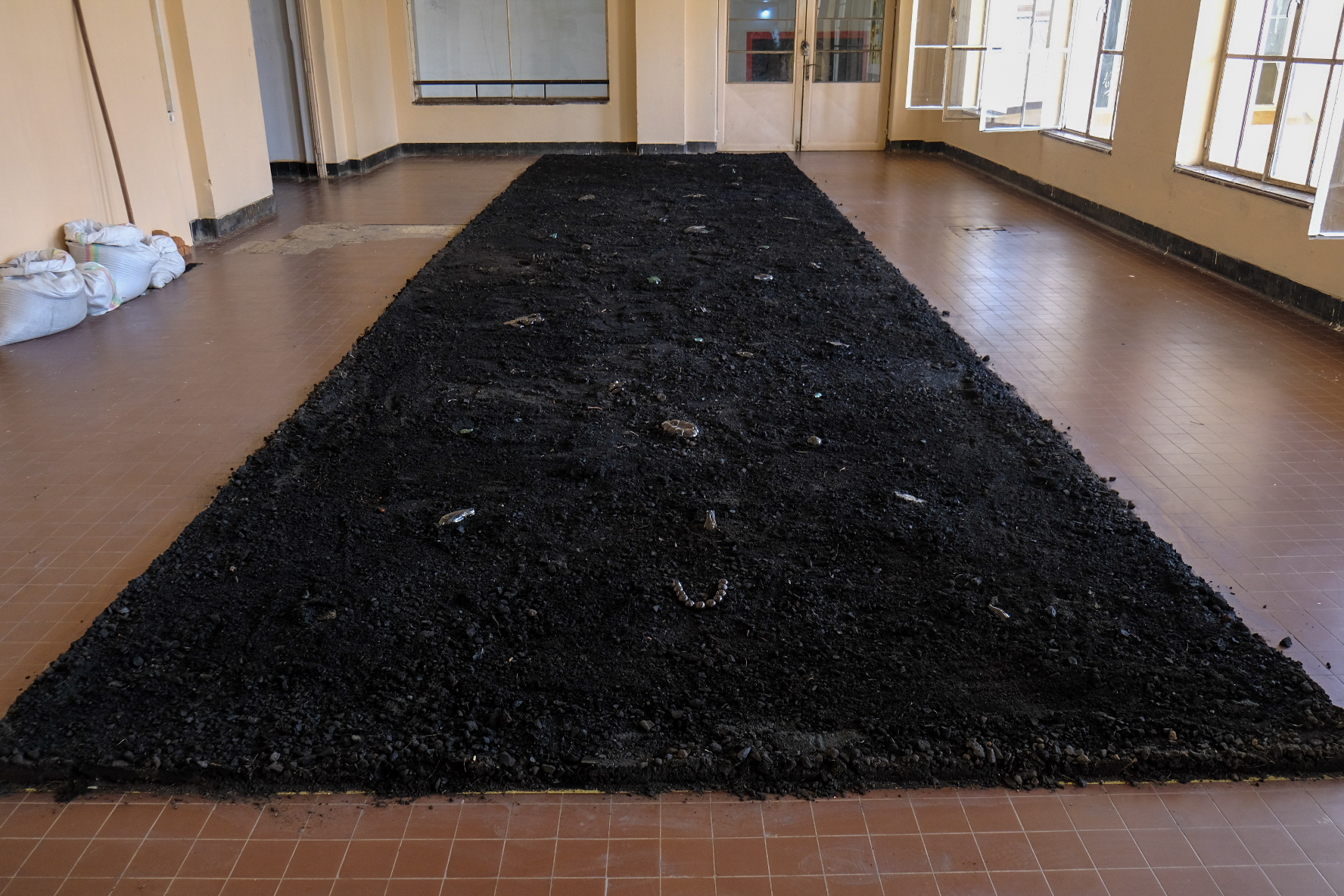
Using soil from Kipushi’s post-mining landscape, gathered from local communities, the installation envisions a future scene illuminated by a natural blue-green glow produced by bioplastics infused with aromatic plants.
At its core, the space features earth that has become residue—sand and waste—left behind after resource extraction, yet life persists within it.
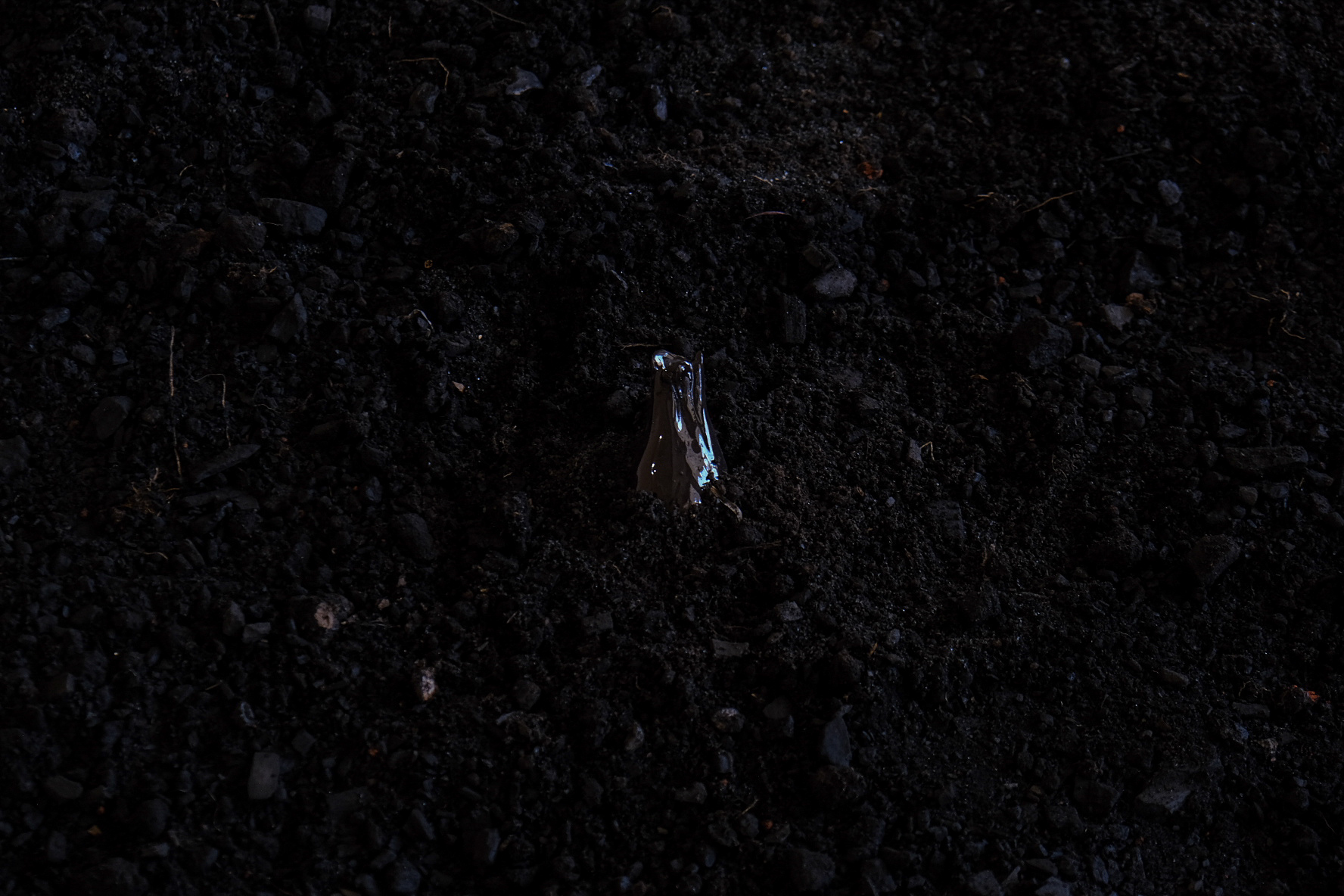
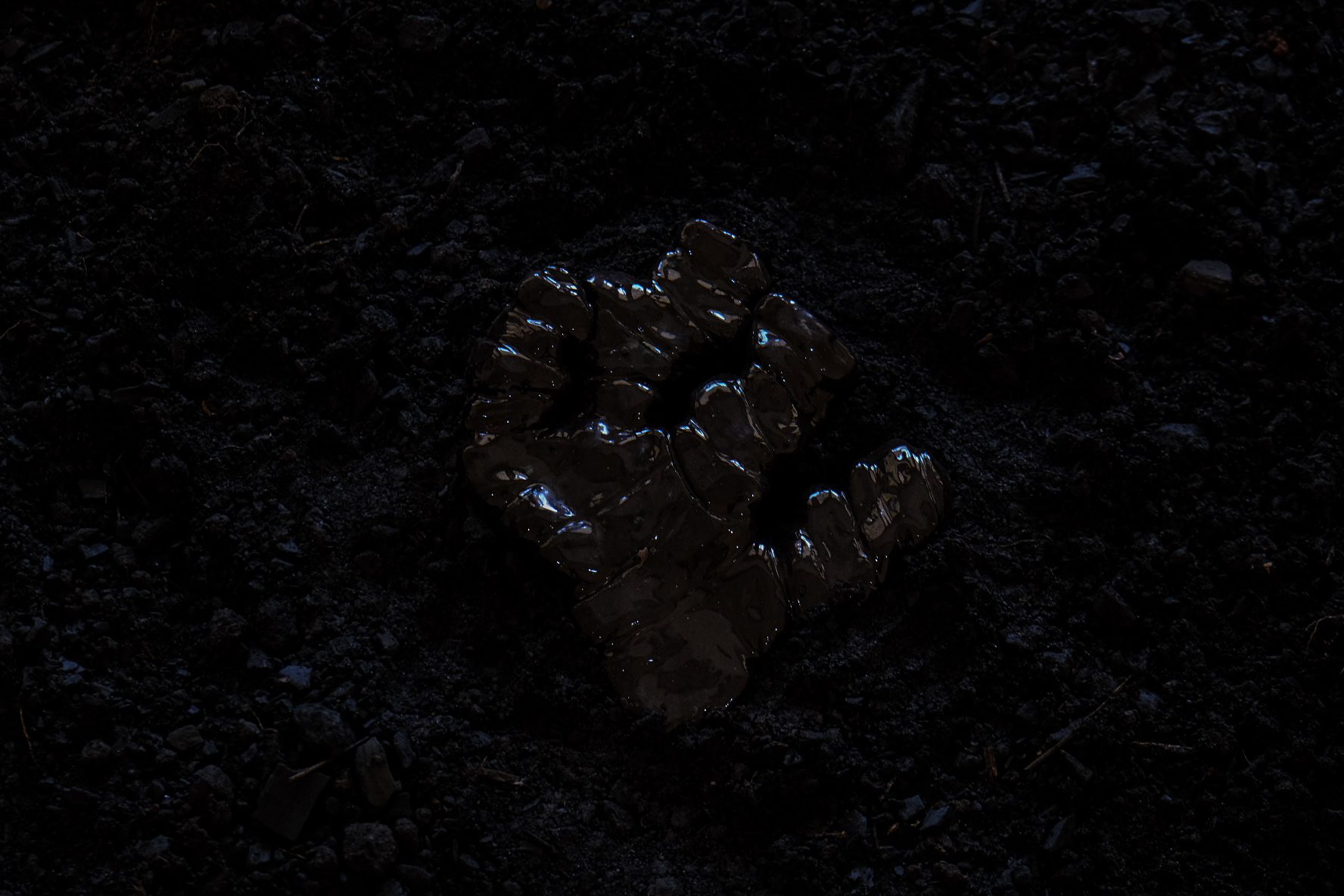
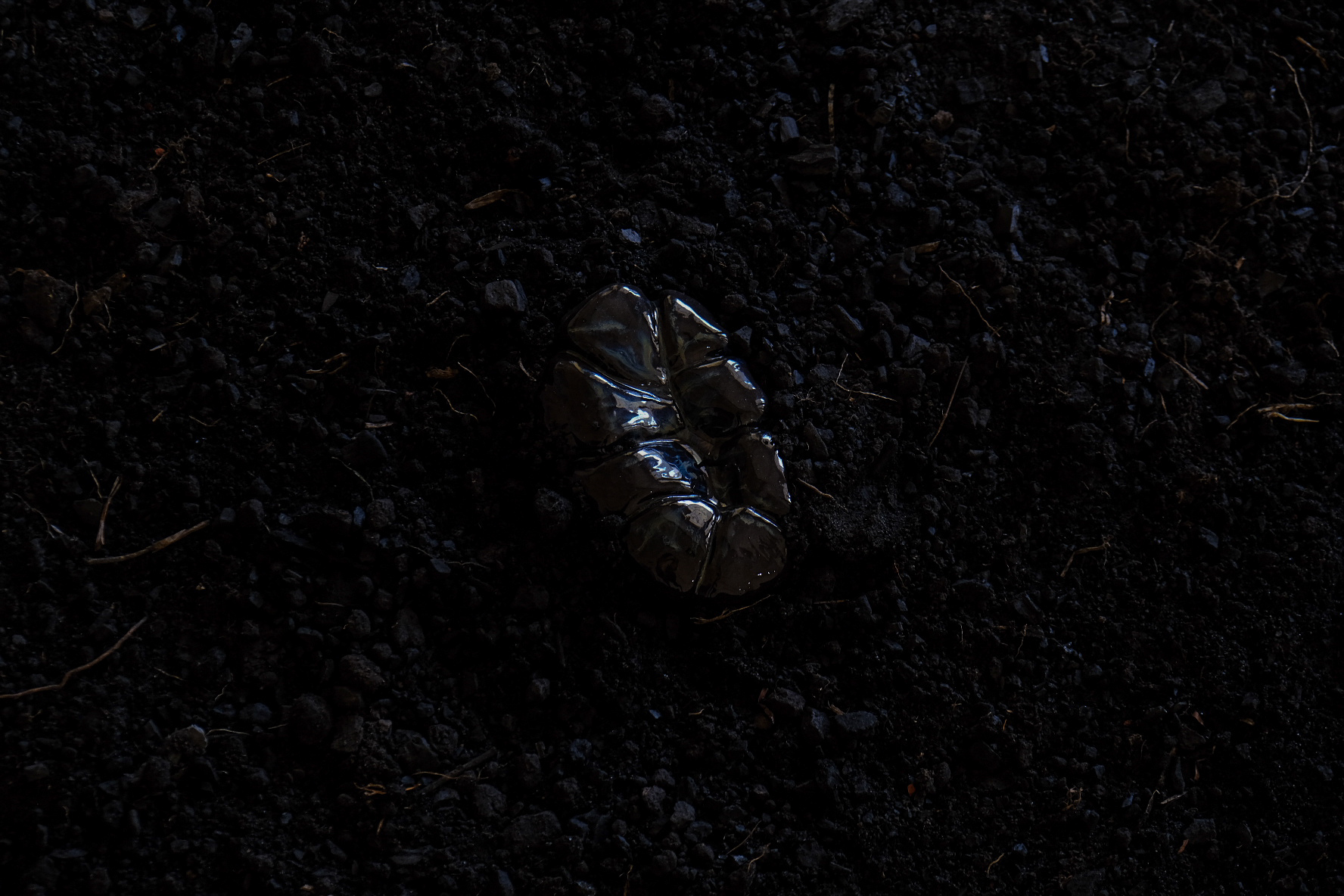
A diagonal trail of earth and sand runs through the exhibit, echoing a “Kalunga” line (symbolizing life force in Kongo cosmology), ending in a triangular spiral to form a miniature territory, a geological trace linking past, present, and future. Along this earth line, fossil-like objects—organic-appearing symbols endemic to the Copperbelt, such as copper flowers, plants, and fruit forms—appear in various states of mutation, crafted from malachite fragments, copper scrap, or glazed clay. Some objects evoke an ancient geological past, while others appear as fossils of a future transformed by extraction processes. The spiral concludes with a jar containing sap from a rare plant, Haumaniastrum katangense, which absorbs copper through its roots, stems, and leaves, only growing in Katanga’s copper-rich soils.
The installation is also voice- and sound-based: objects activate with touch, triggering compositions that blend tactile recordings from Kipushi, local voices, and sounds linked to plants and materials. These are complemented by sounds from a collective workshop on vibrational singing and breathing, as well as speculative fiction on future ‘fruits.’
Visitors can explore, touch the spiral, and listen to what the earth reveals.
The project continues its “Eating the Earth” theme, exploring soil as a body of knowledge, inspired by Valentin-Yves Mudimbe’s ideas of indiscipline and fleetingness. Rather than simply voicing the earth, the installation aims to foster a space where diverse voices, knowledge systems, stories, and futures intersect—integrating local inhabitants, ancestral and scientific insights, plant narratives, soundscapes, and speculative visions rooted in resilience, uncertainty, and regeneration.
Liens